Client
Medics.Academy
Category
Illustration system
Industry
Medical education
Team
Matt Gidaszewski,
Elle Lever, Charlie Dixon, Tiziana Ruiu

Brief
The work needed to improve efficiency and cost saving when producing visuals, create original imagery that exemplifies the brand, and prevent the accumulation of design debt going forward.
Efficiency
Improved efficiency and cost saving when producing visuals.
Memorability
Original imagery that exemplifies the brand and makes it more memorable.
Continuity
Prevents design debt from accumulating through random stock illustrations.
REFERENCE RECREATION / STYLE DEVELOPMENT
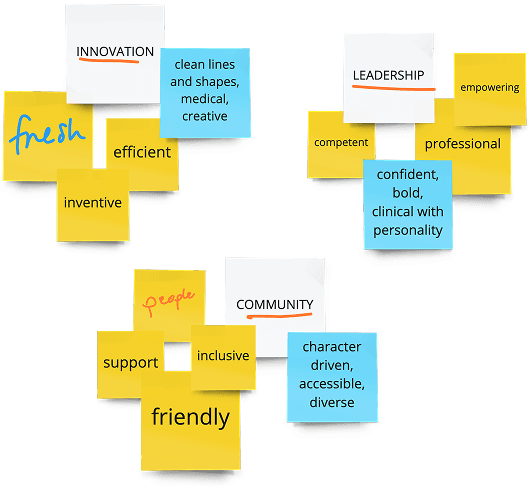
Brand review
A review of the mission and values translated keywords into visual attributes for the system.
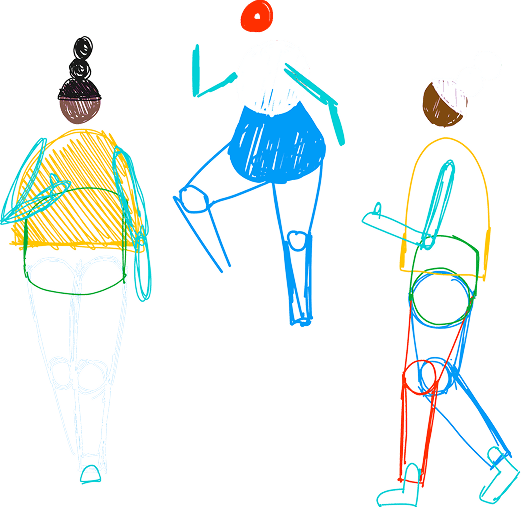
First sketches
Clean efficient lines, confident colour, clinical clarity, and friendly shapes guided the first studies.

Initial designs in Adobe Illustrator
The vector pass exposed missing personality and practicality, especially faces and usable hands.

Further developments
Hands, feet, hair, facial features and rigging points made the characters flexible and animateable.
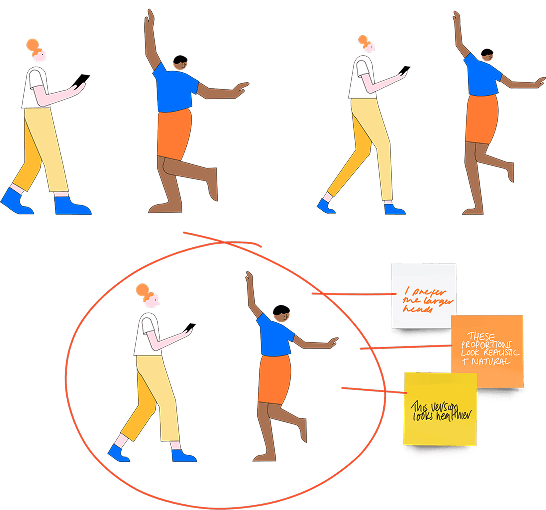
User testing
Health professionals preferred realistic human proportions over exaggerated character bodies.

Prototype
The prototype became a modular base for ages, races, genders, ethnicities and abilities.





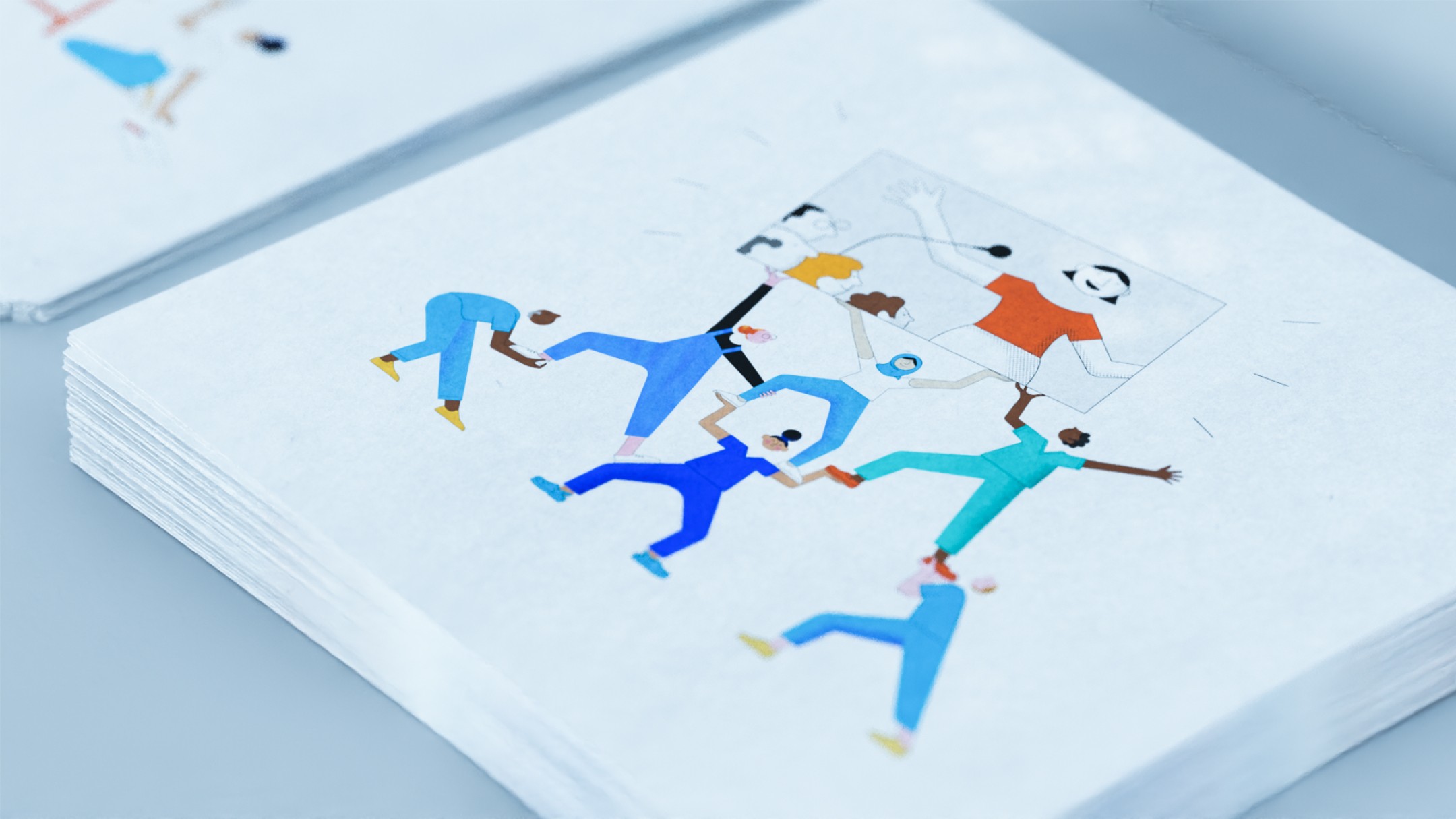
Illustration Breakdown
The system balanced geometric scenery, realistic proportions, flattened objects, mixed perspectives, subtle texture, and a medical focal point in each scene.
Proportions
A character’s size is realistically proportional to other objects within the scene.
Perspective
Objects should be flattened, but perspectives can be mixed.
Scenery
Scenery objects are made from simple geometric shapes.
Texture
Textures and shading are used minimally to add definition and visual interest.
Medical objects
A medical or healthcare element must be present in the scene and ideally a focal point.
Inclusivity
For inclusivity, characters can be fitted out with a multitude of skin and hair colours, hair styles, facial features, props and accessories. These can be combined to represent any age, race, gender, ethnicity, lifestyle, personality and ability.
Proportions
The proportions are realistic while being nice and simple to make easier to animate. Research with medical professionals showed a preference for realistic human proportions.
Versatility
Characters can represent any healthcare role, from scrub suits, tunics and work clogs, to more casual clothes.

Outcome
Original brand imagery
A distinct illustration style gave Medics.Academy visuals that felt ownable, memorable, and consistent.
Reusable library
Characters, props, scenes, and modular components could be recombined across multiple products.
Less design debt
The system reduced reliance on disconnected stock illustration and made future production more efficient.


